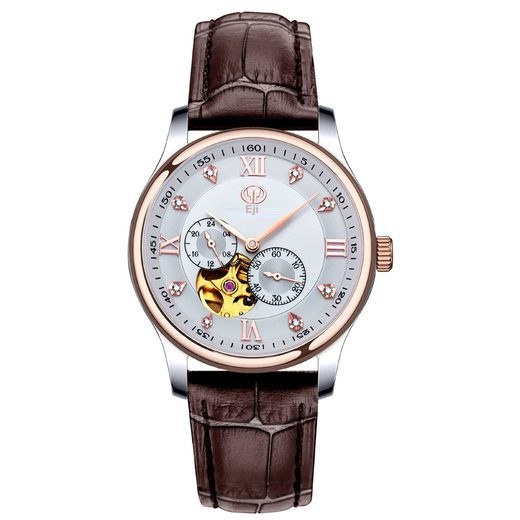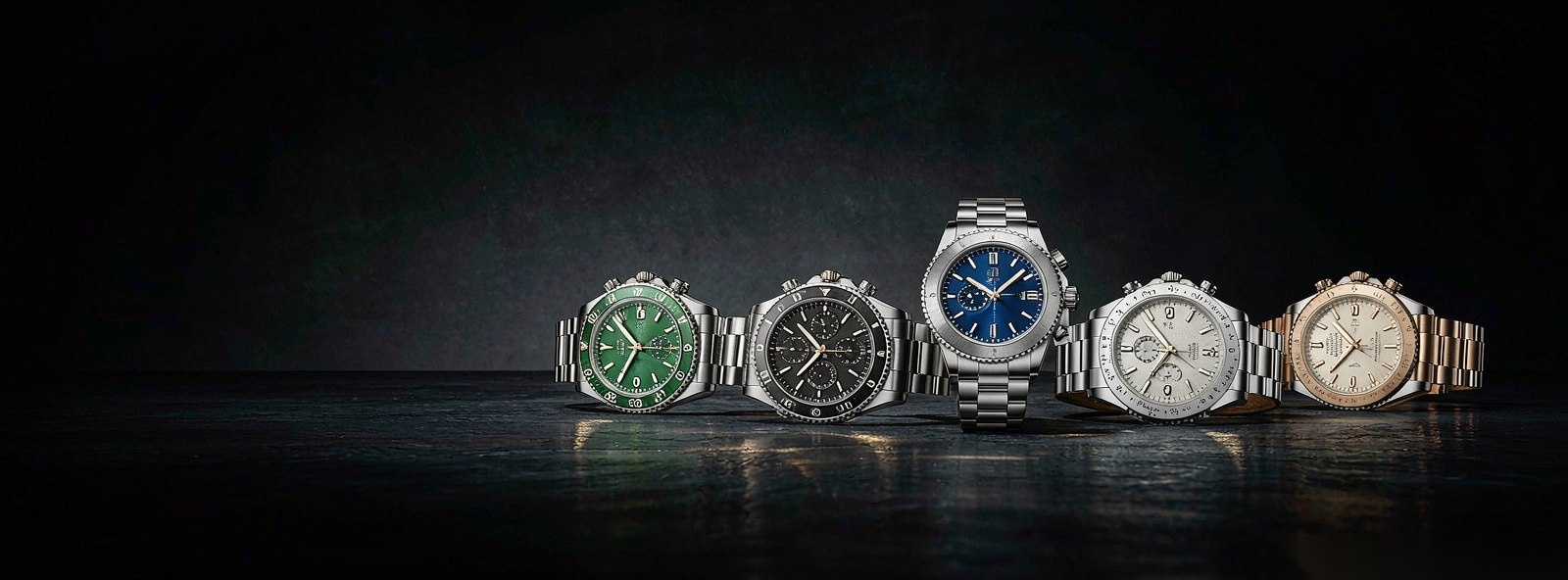
When a brand asks Eji for a quote, the answer is never a single number – and that is a good thing. A custom mechanical watch can be built to very different price points depending on the choices you make. Here is a transparent breakdown of where your budget actually goes.
1. The Movement – Your Biggest Cost Lever
The movement is the heart of the watch and usually the largest single cost factor. An imported automatic mechanical movement, a Seagull multi-function chronograph movement, and a reliable quartz module sit at very different price levels. Choose the movement that matches your brand positioning – not simply the highest specification on paper.
2. Case Material and Finishing
316L stainless steel is the industry standard for a reason: it is durable, hypoallergenic, and takes brushed, polished or PVD gold finishing beautifully. Alloy cases lower the cost but sacrifice feel and longevity. Complex case shapes and multi-step finishing also add labor cost.
3. Crystal: Sapphire vs. Mineral
Sapphire glass is virtually scratch-proof and immediately signals quality. Mineral glass keeps the entry price tight. Many successful brands use sapphire on their hero models and mineral glass on entry-level models – a clean way to build a price ladder.
4. Dial Work
Printing techniques, luminous applications, applied indices and multi-layer dials each add cost. The dial is where a watch looks expensive, so this is one of the best places to invest.
5. Strap and Packaging
Steel bracelet, rubber, leather or nylon; a standard box, a gift box, or fully custom packaging with a warranty card – accessories quietly move the unit price in both directions.
6. Order Quantity
Tooling and setup costs are amortized across the whole run, so larger orders reduce the per-piece price. This is why we always quote several quantity tiers side by side.