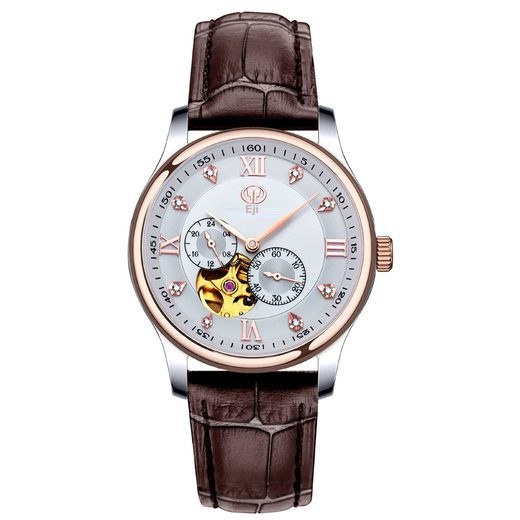
Every watch brand makes this decision early: automatic or quartz? There is no universally right answer – only the right answer for your positioning, your customer and your price point.
Accuracy and Convenience
A quartz movement keeps time to roughly +/- 15 seconds per month and never needs winding. An automatic mechanical movement is typically rated at +/- 20 to 40 seconds per day and stays powered by the motion of the wearer’s wrist – no battery, ever.
Price Points
Quartz movements allow an aggressive entry price and healthy margins at retail. Automatic movements cost more, but they justify a higher price band and carry the story that watch lovers actually pay for.
The Emotional Difference
A sweeping second hand, a skeleton case back, twenty-plus jewels working in perfect coordination without a battery – mechanical watches sell craft, ritual and heritage. Quartz sells precision, practicality and value.
Maintenance
Quartz watches need a battery change every two to three years. Mechanical movements reward care with decades of service, with recommended servicing every three to five years.
So Which Should Your Brand Choose?
- Entry-level, gifting or promotional lines: quartz keeps the price sharp.
- Enthusiast, premium or collector lines: automatic tells a story that justifies the price.
- The strongest catalogs often run both – a quartz entry line and an automatic hero line.
Leave a Reply