Category: 未分类

  • What Affects the Cost of a Custom Mechanical Watch?

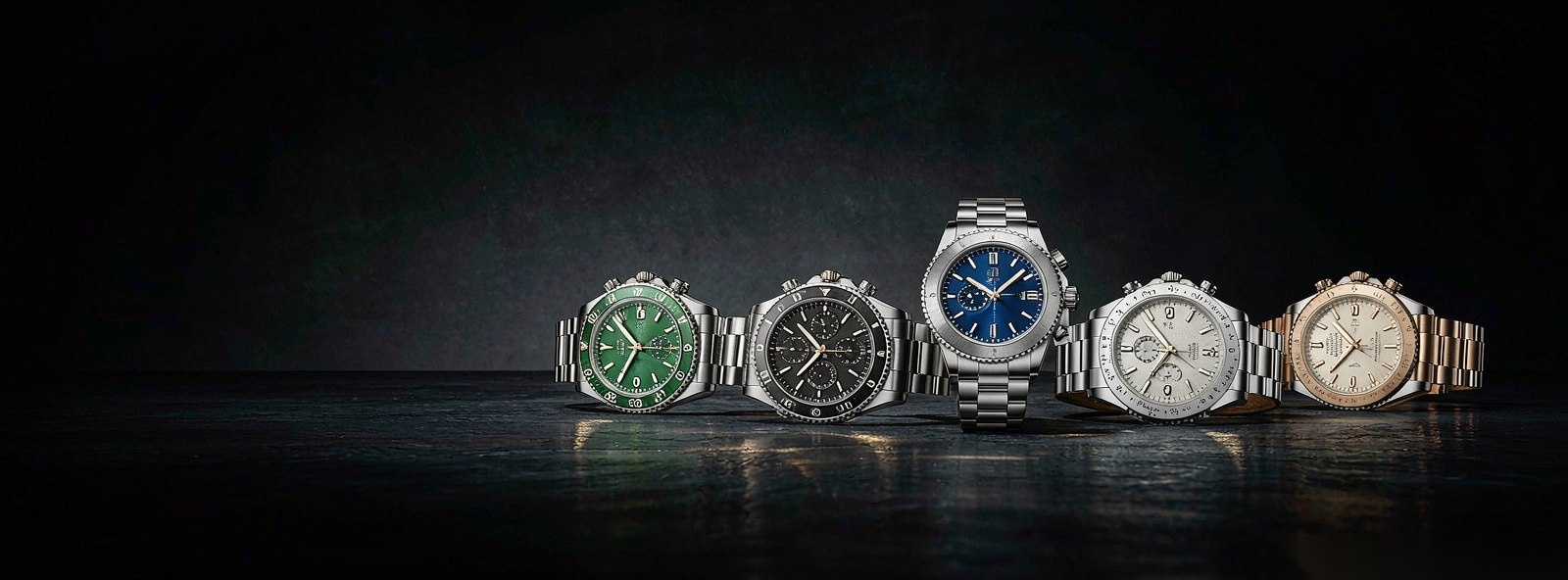
    Custom mechanical watch collection

    When a brand asks Eji for a quote, the answer is never a single number – and that is a good thing. A custom mechanical watch can be built to very different price points depending on the choices you make. Here is a transparent breakdown of where your budget actually goes.

    1. The Movement – Your Biggest Cost Lever

    The movement is the heart of the watch and usually the largest single cost factor. An imported automatic mechanical movement, a Seagull multi-function chronograph movement, and a reliable quartz module sit at very different price levels. Choose the movement that matches your brand positioning – not simply the highest specification on paper.

    2. Case Material and Finishing

    316L stainless steel is the industry standard for a reason: it is durable, hypoallergenic, and takes brushed, polished or PVD gold finishing beautifully. Alloy cases lower the cost but sacrifice feel and longevity. Complex case shapes and multi-step finishing also add labor cost.

    3. Crystal: Sapphire vs. Mineral

    Sapphire glass is virtually scratch-proof and immediately signals quality. Mineral glass keeps the entry price tight. Many successful brands use sapphire on their hero models and mineral glass on entry-level models – a clean way to build a price ladder.

    4. Dial Work

    Printing techniques, luminous applications, applied indices and multi-layer dials each add cost. The dial is where a watch looks expensive, so this is one of the best places to invest.

    5. Strap and Packaging

    Steel bracelet, rubber, leather or nylon; a standard box, a gift box, or fully custom packaging with a warranty card – accessories quietly move the unit price in both directions.

    6. Order Quantity

    Tooling and setup costs are amortized across the whole run, so larger orders reduce the per-piece price. This is why we always quote several quantity tiers side by side.
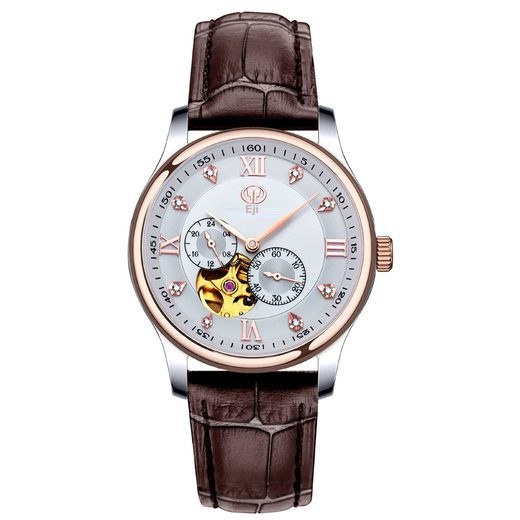

    Rule of thumb: the movement and case decide the cost floor; the dial, strap and packaging decide the perceived value.
    Get a Transparent Quote
  • Automatic vs. Quartz: Choosing the Right Movement

    Automatic vs. Quartz: Choosing the Right Movement

    Automatic mechanical watch

    Every watch brand makes this decision early: automatic or quartz? There is no universally right answer – only the right answer for your positioning, your customer and your price point.

    Accuracy and Convenience

    A quartz movement keeps time to roughly +/- 15 seconds per month and never needs winding. An automatic mechanical movement is typically rated at +/- 20 to 40 seconds per day and stays powered by the motion of the wearer’s wrist – no battery, ever.

    Price Points

    Quartz movements allow an aggressive entry price and healthy margins at retail. Automatic movements cost more, but they justify a higher price band and carry the story that watch lovers actually pay for.

    The Emotional Difference

    A sweeping second hand, a skeleton case back, twenty-plus jewels working in perfect coordination without a battery – mechanical watches sell craft, ritual and heritage. Quartz sells precision, practicality and value.

    Maintenance

    Quartz watches need a battery change every two to three years. Mechanical movements reward care with decades of service, with recommended servicing every three to five years.

    So Which Should Your Brand Choose?

    • Entry-level, gifting or promotional lines: quartz keeps the price sharp.
    • Enthusiast, premium or collector lines: automatic tells a story that justifies the price.
    • The strongest catalogs often run both – a quartz entry line and an automatic hero line.
    Explore Movement Options With Eji
  • How to Start a Watch Brand: Idea to Production

    Watch movement parts in factory

    Starting a watch brand has never been more achievable – but the path from idea to production is full of decisions. Here is the roadmap we walk with first-time founders at Eji.

    1. Define Your Positioning

    Before anything else, finish one sentence: “A [price band] watch for [audience] who love [story].” Every later decision – movement, materials, packaging – flows from this sentence.

    2. Choose Your Path

    Private label: pick proven base models and customize the dial, strap and packaging. Fast to market, friendly minimums. Full custom: design a watch that exists nowhere else. Longer timeline, exclusive result.

    3. Design and Sampling

    Your idea becomes 2D drawings, then a 3D technical structure, then physical samples – typically within 10 to 15 days. You revise until every detail is right, and the approved golden sample becomes the production standard.

    4. Brand Every Touchpoint

    Dial logo, caseback engraving, strap, buckle, box, warranty card – each touchpoint is a branding opportunity. Plan them together so the unboxing experience matches the watch.

    5. Production and QC

    Mass production typically runs 25 to 40 days depending on model and quantity. Movement accuracy testing, water-resistance checks and a final inspection all happen before anything ships.

    6. Launch and Restock

    Sell-through data decides your second order. Plan restock capacity ahead of time so your best sellers never go out of stock.

    Low risk, low investment, fast to market: starting with private label and evolving toward full custom is the proven path for new microbrands.
    Start Your Project Today
  • Behind the Dial: Inside Eji’s QC Process

    Watch quality control inspection

    Quality is not something we inspect at the end – it is built in at every step. Here is what actually happens to a batch of Eji watches before it is allowed to ship.

    1. Incoming Material Inspection

    Movements, cases, crystals, straps and dials are batch-checked the moment they arrive. Non-conforming lots are returned before they ever touch the assembly line.

    2. In-Line Assembly Checkpoints

    QC stations sit between assembly stages, not only at the end. Each stage – movement fitting, dial and hand setting, casing, sealing – has its own pass criteria.

    3. Instrumented Testing

    Every mechanical watch is verified on a timegrapher for accuracy; diver models are pressure-tested to their rated depth (100m for our A003 diver); and sample pieces undergo shock and drop testing.

    4. Extended Duration Testing

    Sample watches from each batch run continuously for 48+ hours to catch defects that only appear over time – amplitude drop, hand alignment, date changeover.

    5. Final Visual Inspection and Packing

    Every single watch is inspected under standardized light, then sealed with protective film and packed. A batch is only released when all stages are green.

    Every order ships with an inspection report, so your team knows exactly what was tested – and how.
    Discuss Your Quality Standards